Cutting-Edge Advances in High-Temperature RTV Silicone for Metal Applications (2026)
Oct 08,2026 | Adhesive
From high-temperature engine compartments to the precision demands of microelectronics, high-temperature RTV silicone is reshaping industry expectations for silicone adhesives and sealants. By 2026, engineers need solutions that not only survive under pressure but also remain stable, flexible, and reliable at extreme temperatures. This article explores the technological breakthroughs, application considerations, and material advantages of high-temperature RTV silicone in metal fabrication and assembly.
What Is High-Temperature RTV Silicone?
High-temperature room-temperature-vulcanizing (RTV) silicone is a specialized formulation designed to bond, seal, or encapsulate metal in environments where heat resistance is non-negotiable. These siloxane-based polymers can withstand continuous exposure from 250°C to 350°C, and even brief excursions beyond this range. They cure upon contact with air, forming a rubber-like, durable, and chemically inert coating. Their flexibility, dielectric strength, and minimal shrinkage make them ideal for metal components exposed to cyclic thermal loads, aggressive chemicals, and vibration.
Materiomart Technical Team Insight: In real-world material selection, we find that many engineers focus only on the maximum temperature rating while overlooking the compatibility between the curing method and the substrate surface energy. The reliability of high-temperature RTV often depends more on controlling surface preparation and curing conditions than on the material specifications alone.
How High-Temperature RTV Withstands Extreme Temperatures
The chemical basis that enables these materials to continue performing when others degrade lies in the backbone of RTV silicone—a long chain made of alternating silicon and oxygen atoms—which offers exceptional thermal stability. Additives such as iron oxide or proprietary fillers further enhance resistance, while advanced crosslinkers lock in elasticity at high temperatures. The result is that RTV silicone maintains structural integrity and flexibility while resisting embrittlement, whereas many organic adhesives are prone to failure or charring. For engineers who need to validate test data, lap-shear and thermal-cycling tests are standard methods for verifying these critical material properties.

Pushing the Limits of Metal Fabrication
The core of metal fabrication is control: reliable bonding, gap sealing, and component protection—without slowing the process or causing rework. High-temperature RTV silicone meets these needs through fast cure times, corrosion resistance, and excellent adhesion to a wide range of metals, including stainless steel, aluminum, copper, and galvanized alloys. For large castings or complex assemblies, the low modulus (soft) nature of cured RTV and its primerless adhesion offer advantages over competing products such as epoxies and polyurethanes—especially where repair or subsequent maintenance may be required.
Materiomart Technical Team Insight: When helping customers implement high-temperature RTV, we frequently encounter cases where “the same adhesive performs inconsistently on different production lines.” In most cases, the root causes are a lack of standardization in dispensing volume, curing conditions, or metal surface cleanliness. To address this, we provide comprehensive support—from product selection and sample testing to process-parameter optimization—to help customers establish a repeatable process window.
Key Characteristics: What Makes High-Temperature RTV Unique
-
Heat Resistance: Reliable sealing, bonding, and thermal insulation, with continuous temperature resistance up to 350°C and short-term resistance up to 400°C.
-
Flexibility: Remains elastomeric after full cure, absorbing movement and vibration in metal components.
-
Chemical Stability: Resistant to oil, water, ethylene glycol, and a wide range of solvents encountered in heavy industry.
-
Non-Corrosive: Alkoxy and oxime curing systems minimize the risk of corrosion in electronic and sensitive metal components.
-
Low Shrinkage: Maintains bond-line thickness and minimizes stress on joints and sensitive modules.
High-Temperature RTV Silicone Formulation Innovations (2026)
In recent years, the number of high-temperature RTVs developed for specific applications has surged. Key advances include:
-
Hybrid Fillers: Improve thermal conductivity in heat-dissipation components.
-
Fast-Cure Systems: Enable in-line assembly in the automotive and electronics industries.
-
Self-Leveling RTV: Ensures gap-free sealing inside housings and enclosures.
-
Enhanced UV and Weather Resistance: Extends service life in outdoor or high-radiation environments.
Industry Applications: Who Relies on High-Temperature RTV?
Automotive Industry
From formed-in-place gaskets, sensor encapsulation, and exhaust-system assembly to turbocharger housings—wherever performance under the hood is critical, high-temperature RTV is indispensable. It replaces traditional cork or rubber gaskets with longer service life and resistance to oil, antifreeze, and vibration. Major OEMs use automated dispensing technology to match the cycle times of modern RTV curing systems.
Aerospace and Aviation
In engines, air ducts, and control modules, reliability under thermal shock is mandatory. Aerospace specialists seek RTVs with exceptional chemical resistance, including fluorosilicone-filled formulations. Notably, these materials often undergo an additional post-cure cycle to maximize outgassing performance in line with system specifications.
Electronics and Power Modules
For IGBT, MOSFET, and high-power module encapsulation, RTV silicone outperforms epoxy because of its flexibility and dielectric strength. Next-generation chip-on-board (COB) designs require extremely low ionic contamination—RTV formulations are tailored for this purpose, providing thermal insulation while resisting thermal cycling.
Heavy-Duty Charging and Energy Infrastructure
Outdoor installations—such as coastal charging stations or wind turbines—face thermal stress, humidity, salt spray, and UV exposure. Hybrid RTVs are known for their durability, helping reduce downtime and costly maintenance cycles. In these applications, choosing the right RTV solution can make the difference between a repair after five years and a trouble-free installation lasting ten years.
Materiomart Technical Team Insight: For new-energy and charging-infrastructure projects, we recommend that customers prioritize RTV grades with long-term weatherability data and low ionic content. Our supply-chain platform provides multi-brand and multi-specification comparisons, along with sample support, helping customers balance cost and reliability.
Solving Common RTV Assembly Challenges
In practice, high-temperature RTV silicone solves more than simply bonding components together. It acts as a gap filler for irregular joints, absorbs expansion and contraction, and facilitates disassembly in maintenance environments where rework may be required. However, proper surface preparation—removing grease, dirt, and oxides—is essential for stable adhesion. Technicians may need to consider flame or plasma treatment for low-surface-energy metals or particularly hard-to-bond substrates, while following rigorous operator training to ensure process reliability.
Choosing One-Component and Two-Component High-Temperature RTV
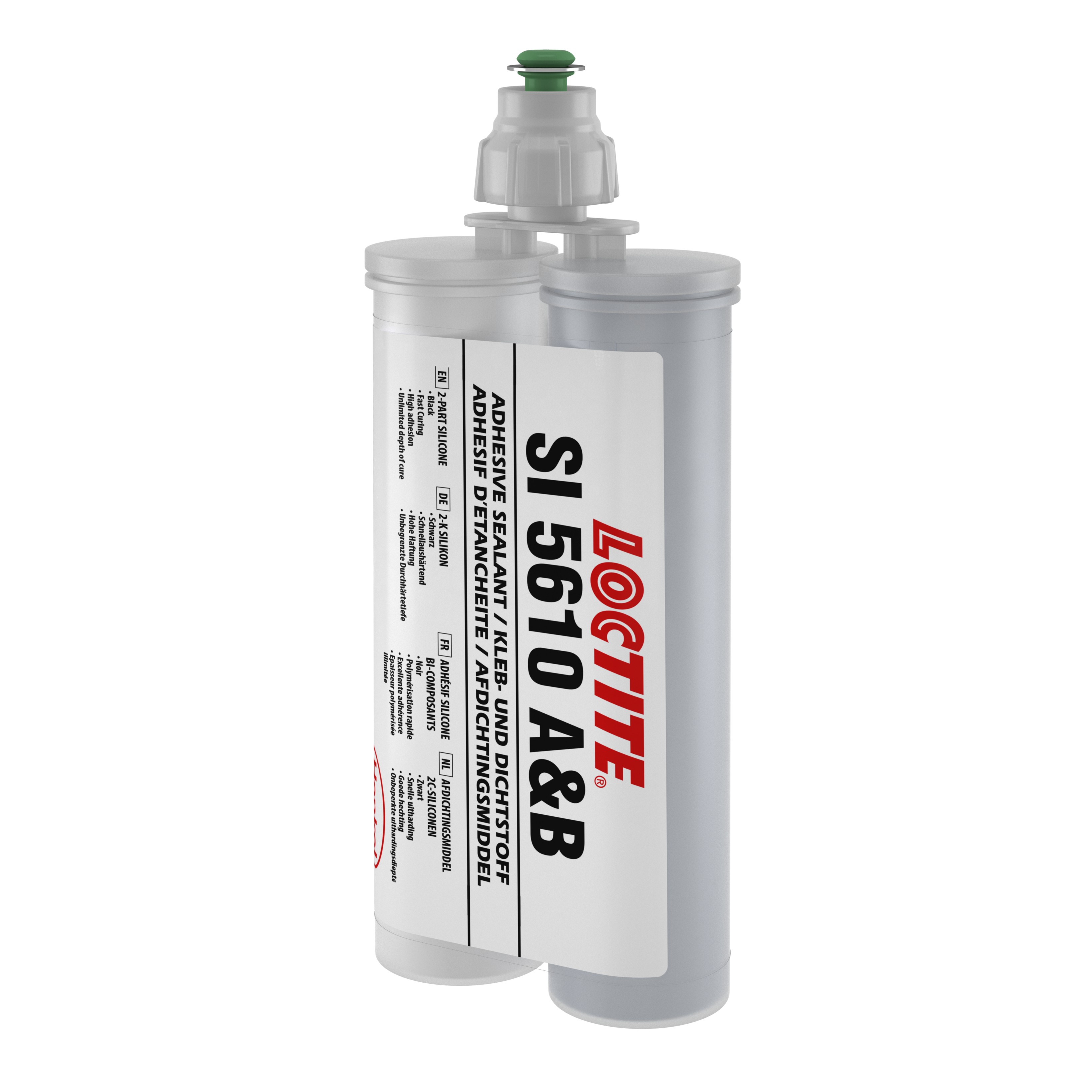
One-component systems offer hassle-free dispensing and moisture-triggered curing, making them ideal for low-volume or on-site assembly. By contrast, two-component (addition-cure) RTV can cure independently of ambient humidity, supports deep-section casting (over 10 mm), and exhibits extremely low shrinkage—delivering superior results in critical assemblies. This choice affects not only process design but also the durability and inspection requirements of the finished product.
Materiomart Technical Team Insight: We frequently help customers decide between one-component and two-component systems. If a production line has precision metering and mixing equipment, two-component RTV can provide faster deep curing and more consistent performance; for on-site application or low-volume, high-mix production, one-component RTV offers greater flexibility. The key is aligning material selection with actual process capabilities.
Regulatory, Environmental, and Safety Considerations in 2026
Current regulations place a strong emphasis on workplace volatile organic compound (VOC) limits, electronic equipment emissions, and material traceability. Modern high-temperature RTV formulations are designed with lower odor, phthalate-free content, and full traceability, making them suitable for aerospace and automotive supply chains. Operators and engineers must consult the Safety Data Sheet (SDS) and implement appropriate personal protective equipment and ventilation measures during assembly and curing.
Emerging Trends: Self-Healing and Smart Sensor Integration in RTV
2026 marks the commercial debut of self-healing RTV for critical metal joints, using thermally triggered microencapsulated repair chemistry. At the same time, sensor-enhanced coatings enable real-time monitoring of joint integrity or temperature, bridging the gap between passive protection and active process feedback. These innovations reduce downtime, component failures, and maintenance costs, ensuring that RTV takes on a next-generation enabling role in high-value operations.
If you need further assistance with high-temperature RTV silicone selection, samples, or process support, please feel free to contact our technical team.
Official Website : https://materiomart.com/
Technical Consultation : https://materiomart.com/pages/contact-us
Comment