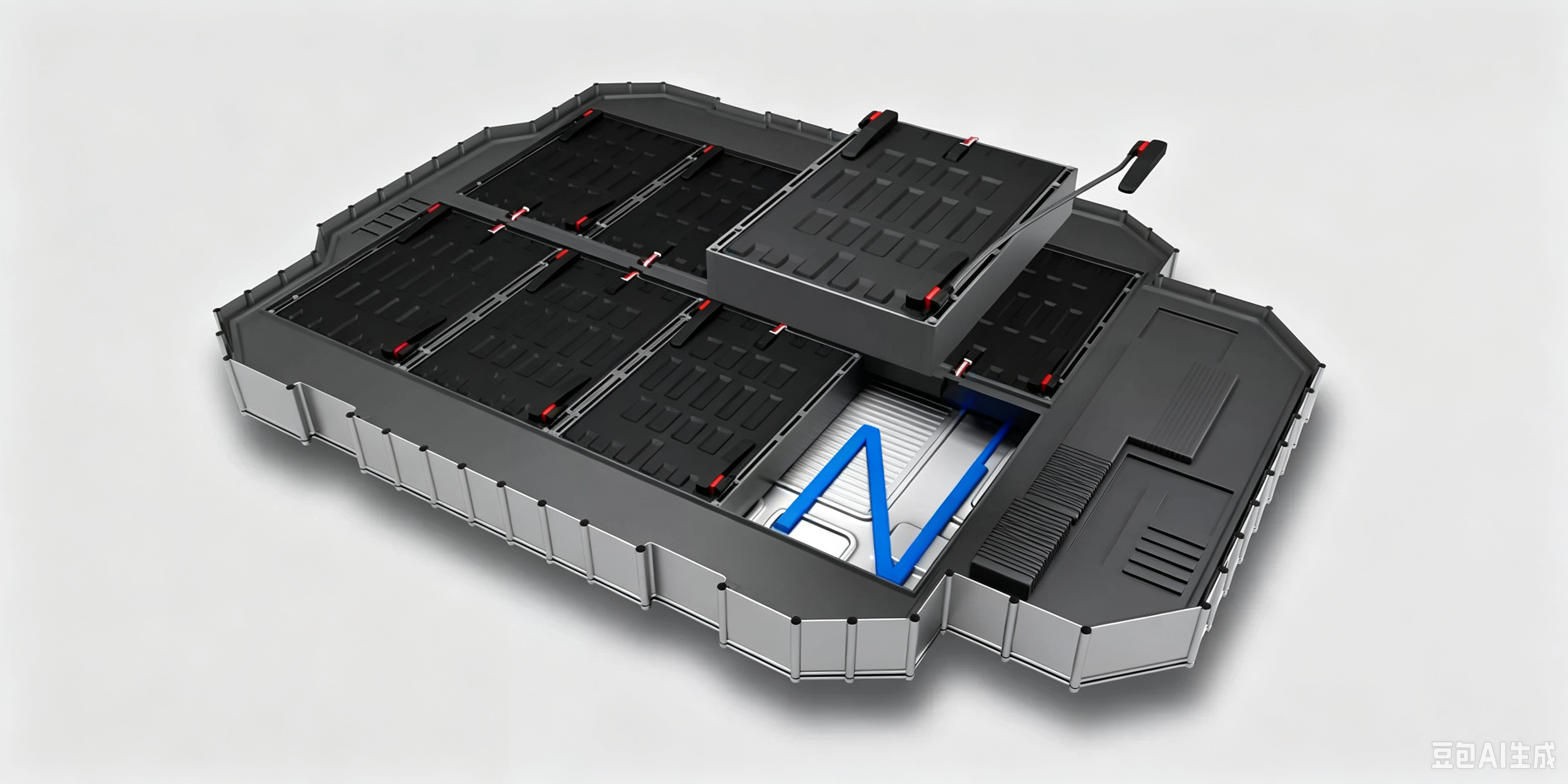
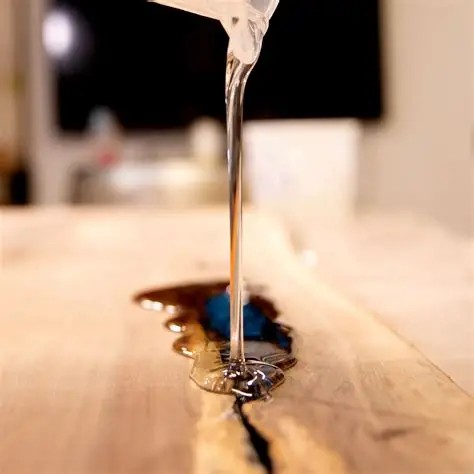
The three major schools of potting compounds—epoxy, silicone, and polyurethane—each have their own strengths and limitations. The key to material selection is not whether a compound “works,” but whether it is “the right fit.”
The following content has been compiled based on industry experience and is intended as a reference for technical selection. Different opinions and discussion are welcome.
Collaborative robots and near-humanoid robots have developed rapidly in recent years, and the joint motor is one of their core components. As torque density continues to increase, more torque must be delivered within the same volume, causing a significant rise in the thermal density of the stator windings. If heat cannot be effectively dissipated, the copper wires may undergo micro-vibration under electromagnetic forces, potentially wearing through the enamel insulation and eventually causing turn-to-turn short circuits—now a typical failure mode of high-torque-density motors. The potting process encapsulates the windings as a whole while providing both thermal conduction and wire-locking functions, and has become a standard process for this type of motor.
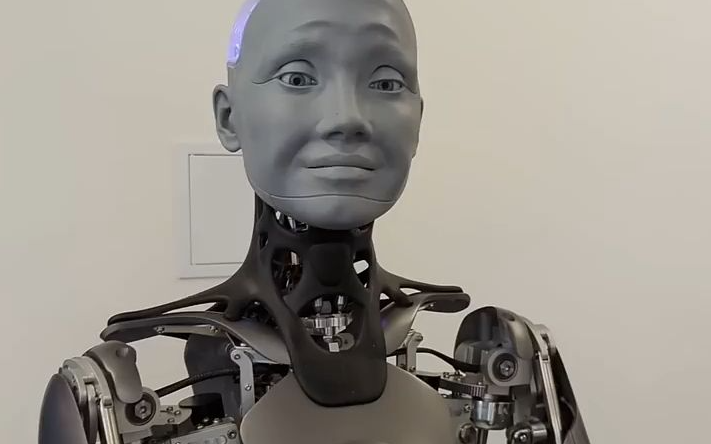
However, improper adhesive selection during potting can have more serious consequences than not potting at all: insufficient thermal conductivity causes heat to accumulate inside the windings, accelerating insulation aging; incomplete filling creates voids between turns, which can easily trigger partial discharge under high-voltage conditions; an overly brittle compound may crack under thermal shock; and an overly soft compound cannot effectively restrain the windings, leaving the risk of insulation wear.
I. Core Requirements for Potting Compounds Used in Joint Motors
Joint-motor potting is not performed merely for the sake of potting. It imposes six key performance requirements on the adhesive:
-
Thermal conductivity. The increase in torque density leads to a rise in winding thermal density. The compound must effectively transfer heat to the housing or water-cooling plate; otherwise, temperature rise will be difficult to control, and prolonged operation at excessive temperatures will eventually cause insulation failure.
-
Dielectric performance and PDIV. Robot bus voltages are evolving from 48V toward 400V and even 800V, and both turn-to-turn and winding-to-ground insulation must meet the relevant requirements. Any void in the adhesive layer may become the starting point for partial discharge.
-
Wire-locking capability. Joint motors start and stop frequently, and electromagnetic forces cause slight copper-wire vibration (fretting). Once the enamel coating is worn, turn-to-turn short circuits can easily occur. The compound must reliably secure every copper wire and form an integral restraint.
-
Temperature-range adaptability and thermal-shock resistance. Although joints are not exposed to an engine-compartment environment, repeated acceleration, deceleration, and brake-holding operations cause significant temperature fluctuations. Outdoor and military applications are even more demanding, and the compound must not crack under thermal shock.
-
Environmental resistance. In environments with cutting fluids, moisture, and dust, once the housing seal fails, the potting layer becomes the second—and final—line of defense.
-
Repairability. Prototype units often need to be disassembled for analysis, while rigid compounds are generally impossible to remove without damage.
There is no universal adhesive; selection is essentially a trade-off among performance requirements.
II. Epoxy Resin—The Mainstream Solution for Joint-Motor Potting
Performance: A balanced combination of thermal conductivity, wire locking, and dielectric properties
Epoxy resin is the most widely used type of potting compound for joint motors. By incorporating high proportions of thermally conductive fillers such as alumina and boron nitride, its thermal conductivity can exceed 2.0 W/m·K, meeting the heat-dissipation requirements of high-torque-density motors. After curing, it becomes rigid and has high mechanical strength, securing loose copper wires into an integral structure. This wire-locking capability is critical for suppressing fretting-related wire breakage, but it is often overlooked by engineers who focus solely on thermal conductivity during material selection. Epoxy resin also has relatively high dielectric strength. Combined with the vacuum pressure impregnation (VPI) process, it can achieve void-free filling and meet the requirements for preventing partial discharge as robot voltages increase. It adheres well to substrates such as copper and steel, and normally requires no primer treatment.
Process: An inherent conflict exists between thermally conductive fillers and penetrability
Epoxy resins are generally two-component systems that can be cured at room temperature with amines or by heating with anhydrides. After thermally conductive fillers are introduced, the system viscosity increases, creating an inherent conflict between high filler loading for thermal conductivity and penetration without vacuum. To allow the compound to penetrate the tiny gaps between turns, preheating is required to reduce viscosity, together with vacuum or pressure-assisted processing to force penetration. Under atmospheric-pressure potting conditions, effective filling between turns of fine-gauge wires is difficult. The curing process involves heat generation and shrinkage. Large-mass potting must therefore be temperature-controlled in stages; otherwise, internal stress may cause cracking and surface sink marks.
Limitations: Brittleness, lack of repairability, and demanding process control
The main limitations of epoxy resin include relatively weak thermal-shock resistance; it is prone to cracking at low temperatures, and repeated rapid cooling and heating may produce microcracks. Once cured, it is hard and cannot be repaired, and disassembling a prototype generally results in scrapping it. Thermally conductive fillers also tend to settle, while deviations in the two-component mix ratio directly affect final performance.
When thermal conductivity, wire locking, and dielectric performance are all required, epoxy resin is the preferred solution. The trade-offs are brittleness (toughening is the primary technical challenge), irreversibility, and relatively demanding process control.
III. Polyurethane—A Compromise Solution with Excellent Vibration Absorption but Limited Temperature and Moisture Resistance
Performance: Between rigid and soft materials, with low-temperature vibration absorption as a key advantage
Polyurethane falls between the rigidity of epoxy resin and the softness of silicone. It retains good elasticity at low temperatures and provides vibration absorption and noise reduction. Some sources indicate that polyurethane encapsulation of transformers can reduce noise by 5~10 dB (Xrun methodology) compared with rigid epoxy potting, offering practical value for quiet equipment. With filler modification, its thermal conductivity can reach 1.0~2.5 W/m·K (Xrun grading methodology). Its adhesion to enamelled wire is moderate and weaker than that of epoxy systems.
Process: Lower heat generation, but moisture-sensitive before curing
Polyurethane is also a two-component system consisting of polyol and isocyanate. Its curing heat generation is lower than that of epoxy, making it suitable for large-volume potting. Its main process challenge is moisture sensitivity before curing: moisture entering the system causes foaming, as isocyanate groups react with water to generate gas. Vacuum degassing is therefore generally required. Similar to epoxy, filling of tiny gaps still requires vacuum or pressure-assisted processing.
Limitations: Upper temperature limit and hydrolysis sensitivity
The main limitation of polyurethane is its temperature resistance. Conventional polyurethane generally reaches only Insulation Class B (130℃), while modified systems can be upgraded to Class F (155℃). To reach Class H (180℃), an epoxy or silicone system must be used instead. Once the operating temperature exceeds 120℃, electrical performance begins to decline and the chemical structure gradually decomposes. In addition, polyurethane is sensitive to hydrolysis and can degrade easily under prolonged damp-heat or condensation conditions. In scenarios such as condensation inside terminal boxes, epoxy resin, with its superior water resistance, is more suitable. Increasing the thermally conductive filler content raises viscosity and promotes filler settling, resulting in a narrow process window.
Polyurethane offers advantages in low-voltage, low-temperature applications that require vibration absorption, noise reduction, and frequent prototype disassembly. However, for joint motors with high torque density and relatively high temperature rise, polyurethane is usually the first potting option to be eliminated.
IV. Silicone—Excellent Wide-Temperature Elasticity but Weaker Mechanical Strength, Wire Locking, and Dielectric Performance
Performance: Thermal-shock resistance, hydrophobicity, and repairability
Silicone is based on a siloxane backbone and offers elasticity across a wide temperature range (approximately -45~200℃; some sources claim it can withstand 400℃, but this remains to be confirmed). It resists cracking under thermal shock and can absorb stress. It is hydrophobic and moisture-resistant; some sources indicate that its insulation resistance degradation rate in humid environments is only one-third that of epoxy resin. With a Shore A hardness range of 15~65, it provides vibration absorption and can also be repaired, making it suitable for the prototype-development stage. Its thermal conductivity is 0.6~3.5 W/m·K, and substantial modification is required to exceed 3 W/m·K.
Process: Can be degassed, but provides no structural support
Silicone is available in one-component and two-component systems. Vacuum degassing can eliminate the vast majority of bubbles, but the material itself is relatively soft and provides no structural support after potting. Its adhesion to substrates such as copper and steel is relatively poor, so primer treatment is usually required; otherwise, interfacial debonding can easily occur.
Limitations: Softness, relatively weak dielectric performance, and silicone-oil migration
The limitations of silicone correspond directly to the key requirements of joint motors. Its mechanical strength is low and its wire-locking capability is insufficient. When the joint starts and stops, the copper wires vibrate against one another, and the inherent strength of silicone is insufficient to restrain them effectively, potentially increasing the risk of wire breakage. Its dielectric strength is lower than that of epoxy resin, putting it at a disadvantage when high-voltage windings require high PDIV. Its void-filling capability is also no better than that of epoxy. In addition, there is a risk of silicone-oil migration and contamination, which may affect surrounding surfaces and subsequent coating processes. It is also relatively expensive. Soft compounds can neither serve as structural surfaces nor withstand compressive loads effectively.
Silicone may be considered for low-voltage applications that require reworkability, extremely severe thermal shock resistance, or impregnation only without rigid encapsulation; however, silicone is not suitable for high-voltage, highly filled joint motors that require wire locking and vibration resistance.
V. Selection Recommendations
In summary:
-
High torque density, with requirements for thermal conductivity, wire locking, and PDIV performance → Epoxy resin.
-
Low voltage, frequent disassembly of prototypes, and low-temperature vibration and noise absorption → Polyurethane, but first confirm that the temperature rise does not exceed its maximum temperature rating.
-
Low voltage, reworkability required, and severe thermal shock across a wide temperature range → Silicone, but its soft nature, relatively weak dielectric performance, and need for a primer must be accepted.
Choose epoxy for rigid, high-strength applications; silicone for soft, removable applications; and polyurethane for low-cost vibration absorption—provided that the operating temperature does not exceed its maximum withstand limit.