Types, Formulations, Production Processes, and Comprehensive Applications of Silicone Rubber
Jun 09,2026 | Adhesive
As one of the most important product forms in the silicone industry, silicone rubber can maintain its elasticity over a wide temperature range for extended periods and offersexcellent electrical properties, chemical stability, water resistance, ozone resistance, and aging resistanceproperties, making it an irreplaceable key polymer material in modern industry and everyday life. China has now become the world's largest producer and consumer of silicone rubber, with products widely used in core fields such as electronics and electrical appliances, automobiles, construction, healthcare, aerospace, and more.
I. Silicone Rubber Classification
According to differences in vulcanization mechanisms and processing methods, silicone rubber is mainly divided into \\heat-cured silicone rubber (high-temperature vulcanized silicone rubber, HTV)androom-temperature-vulcanized silicone rubber (RTV)\\two major categories, which differ significantly in their formulation systems, production processes, and application scenarios:
-
High-temperature-vulcanized silicone rubber (HTV): With a molecular weight of approximately 400,000–800,000, it requires peroxide crosslinking and curing at a high temperature of 110~180°C. It is mainly used to manufacture molded and extruded products. China's current annual HTV production is approximately 500,000 tons.
-
Room-temperature-vulcanized silicone rubber (RTV): With a lower molecular weight (10,000–100,000), it can crosslink and cure at room temperature, making it convenient to use and suitable for on-site application. It is further divided intoone-component RTV (cured by moisture in the air) and two-component RTV (cured by mixing the base compound and curing agent). China's current annual RTV production is approximately 1.2 million tons, accounting for more than 70% of total silicone rubber production.
II. Core Properties of Silicone Rubber
The unique Si-O backbone structure of silicone rubber gives it overall performance far superior to that of ordinary organic rubber:
-
Ultra-wide temperature-range adaptability: It has the broadest working temperature range of all rubbers, reaching \\-100~350°C\\. After heat-air aging at 250°C for several thousand hours or at 300°C for several hundred hours, vinyl silicone rubber or low-phenyl silicone rubber can still maintain its elasticity. Low-phenyl silicone rubber vulcanizates remain elastic after aging at 350°C for several dozen hours, with a glass transition temperature as low as - 140°C. They can be used as heat-resistant coatings on the inner walls of rocket nozzles to withstand instantaneous temperatures of several thousand degrees.
-
Excellent aging resistance: When exposed outdoors in an unstressed state for several years, its properties show no significant changes. Its resistance to ozone, oxygen, light, and weathering is far superior to that of ordinary organic rubber.
-
Excellent electrical insulation properties: Its electrical insulation properties change very little when exposed to moisture, frequency changes, or rising temperatures. The silicon dioxide produced after combustion remains an insulator. Its corona-resistance life is1000 timesthat of polytetrafluoroethylene, while its arc-resistance life is20 timesthat of fluoroelastomer, providing extremely high reliability in high-voltage applications.
-
Special surface properties and physiological inertness: With low surface energy, its water absorption is only approximately1%after prolonged immersion in water. Its physical properties do not deteriorate, it has good mold resistance, and it does not adhere to most materials. It is odorless and non-toxic, has no adverse effects on the human body, and produces only a mild reaction with body tissues.
-
High gas permeability: At room temperature, its permeability to nitrogen, oxygen, and air is 30~40 times higher than that of natural rubber. It also exhibits selective gas permeability, with carbon dioxide permeability approximately 5 times that of oxygen.
-
Excellent biomedical properties: Its molecular structure gives it good biocompatibility and controllable degradability, which have been validated through extensive animal studies and human clinical trials.
III. Formulation System of High-Temperature-Vulcanized Silicone Rubber (HTV)
The formulation of high-temperature-vulcanized silicone rubber is relatively simple and generally consists ofraw gum, reinforcing agents, vulcanizing agents, structure-control agents, and various functional additivesin 5~6 components.
1. Three Major Principles of Formulation Design
-
Silicone rubber is a raw gum with an extremely high degree of saturation andusually cannot be vulcanized with sulfur. Organic peroxides must be used as vulcanizing agents; therefore, the compound must not contain active substances that can react with peroxide decomposition products, such as channel carbon black and certain organic accelerators.
-
Silicone rubber products are mostly used at high temperatures, so the compounding ingredients must have high-temperature stability and are typically selectedInorganic oxidesAs reinforcing agents.
-
Silicone rubber is prone to siloxane bond cleavage and rearrangement under the action of trace amounts of acids or bases, resulting in reduced heat resistance. Therefore, the acidity and alkalinity of compounding ingredients must be strictly controlled.
2. Vulcanization System
Organic peroxides are the most commonly used vulcanizing agents for heat-vulcanized silicone rubber. Based on their activity, they can be divided into two categories:
-
General-purpose peroxides:Highly active and effective for vulcanizing various types of silicone rubber, such as benzoyl peroxide (BPO) and dicumyl peroxide (DCP).
-
Vinyl-specific peroxides:Less active and capable of vulcanizing only silicone rubber containing vinyl groups, such as 2,5 - dimethyl - 2,5 - di-tert-butylperoxyhexane (DBPH). The resulting vulcanizate has better heat resistance.
Vulcanization mechanism: Peroxides decompose at high temperatures to generate free radicals, which initiate free-radical reactions involving the methyl or vinyl groups on silicone rubber molecular chains, forming C-C crosslinking bonds. In addition, silicone rubber can also be radiation-cured using high-energy rays, following the same free-radical mechanism.
3. Reinforcement System
Unreinforced silicone rubber vulcanizates have a strength of only approximately 0.3MPa and have no practical application value. After adding suitable reinforcing agents, the strength can be increased to3.9~9.8MPa. Reinforcing fillers for silicone rubber are divided into two categories according to their effectiveness:
-
Strongly reinforcing fillers:Particle size 10\50nm, with a specific surface area of 70\400m²/g, primarily consisting of synthetic silica (fumed silica). Among these,Fumed silicaprovides the best reinforcing effect, producing compounds with high mechanical strength and good electrical properties;Precipitated silicahas a slightly weaker reinforcing effect but offers better resistance to heat aging and lower cost.
-
Weakly reinforcing fillers:Particle size 300~1000nm, with a specific surface area below 30m²/g, such as diatomaceous earth, quartz powder, and titanium dioxide. These are mainly used to reduce costs and adjust compound hardness.
4. Functional Additives
-
Structure Control Agents: Prevent fumed silica-reinforced rubber compounds from undergoing “structuring” (hardening and reduced plasticity) during storage. Commonly used agents include diphenylsilanediol, low-molecular-weight hydroxyl silicone oil, and silazanes.
-
Heat-Resistant Additives: Significantly improve the hot-air aging performance of silicone rubber. Ferric oxide is the most commonly used additive (at a dosage of 3~5 phr); metal oxides such as manganese, zinc, and nickel have similar effects.
-
Colorants: Silicone rubber commonly uses inorganic colorants, such as iron oxide (red), titanium dioxide (white), chromium trioxide (green), carbon black (black), and ultramarine (blue).
IV. Room-Temperature Vulcanizing Silicone Rubber (RTV) Formulation Systems
Room-temperature vulcanizing silicone rubber does not require heating to a high temperature and can cure at room temperature. It is flexible and convenient to use, making it the silicone rubber variety with the largest production volume and broadest range of applications.
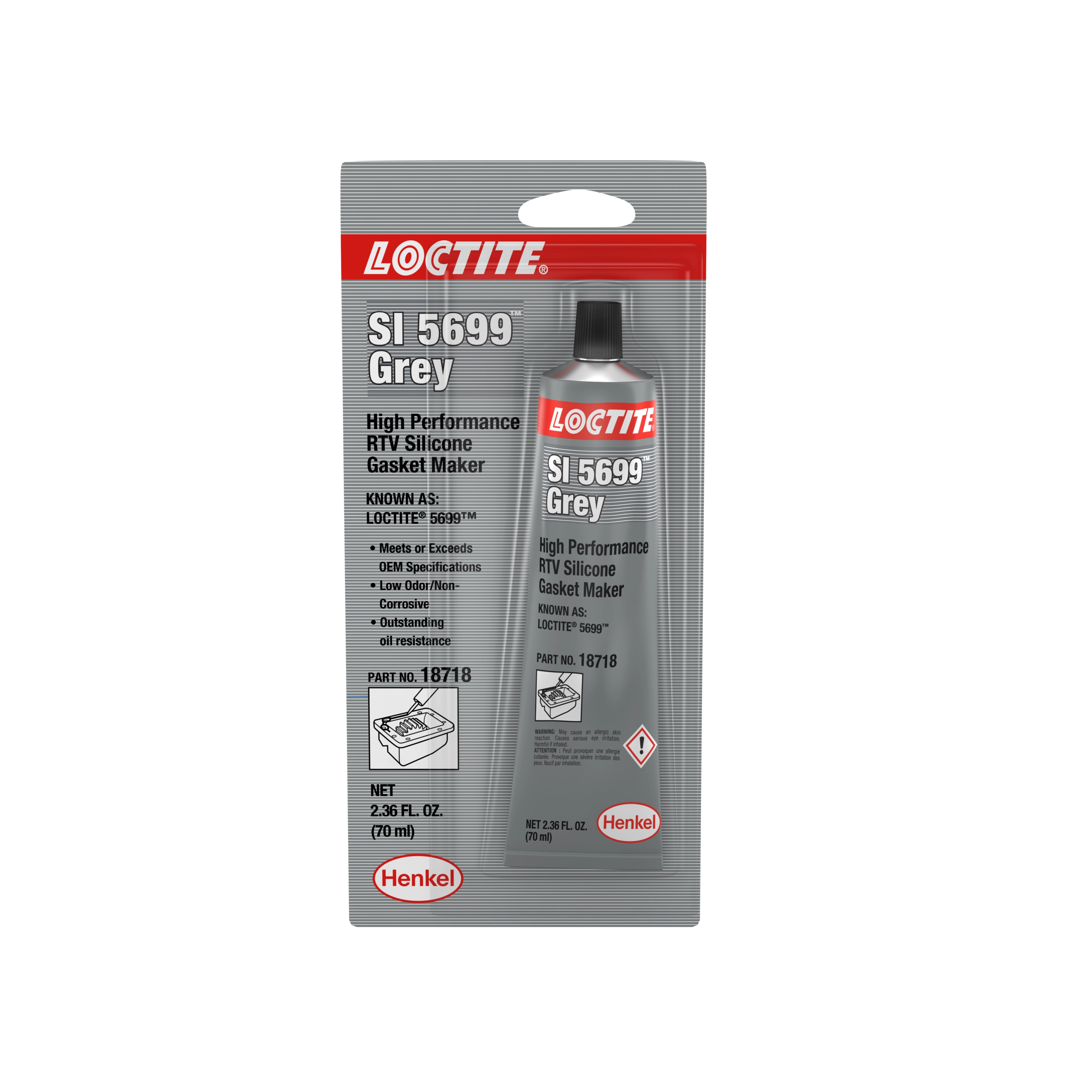
1. One-Component RTV Silicone Rubber
-
Curing Mechanism: Crosslinking is initiated by moisture in the air, with curing progressing gradually from the surface inward. At room temperature, a depth of 2~4mm can be cured within 24 hours, while complete curing requires more than 7 days.
-
Typical Formulation: 107 room-temperature vulcanizing silicone rubber gum (base material) + crosslinking agent (such as methyl triethoxysilane) + catalyst (such as an organotin compound) + reinforcing filler (fumed silica and calcium carbonate) + coupling agent (to improve adhesion).
-
Features: Convenient to use, with no need for metering or mixing. It is suitable for on-site sealing and bonding, but has a relatively slow curing rate and difficulty curing in deep sections.
![]()
2. Two-Component RTV Silicone Rubber
-
Curing Mechanism: It is divided into two types: condensation-cure and addition-cure. Condensation-cure silicone rubber undergoes crosslinking through dealcoholization and dehydration reactions between the base compound and crosslinking agent under the action of a catalyst. Addition-cure silicone rubber undergoes crosslinking through an addition reaction between vinyl silicone rubber and hydrogen-containing silicone oil under the action of a platinum catalyst.
-
Typical Formulation: Component A (base compound + reinforcing filler + additives), Component B (curing agent + catalyst). The two components are mixed uniformly in the specified ratio before use and then cured.
-
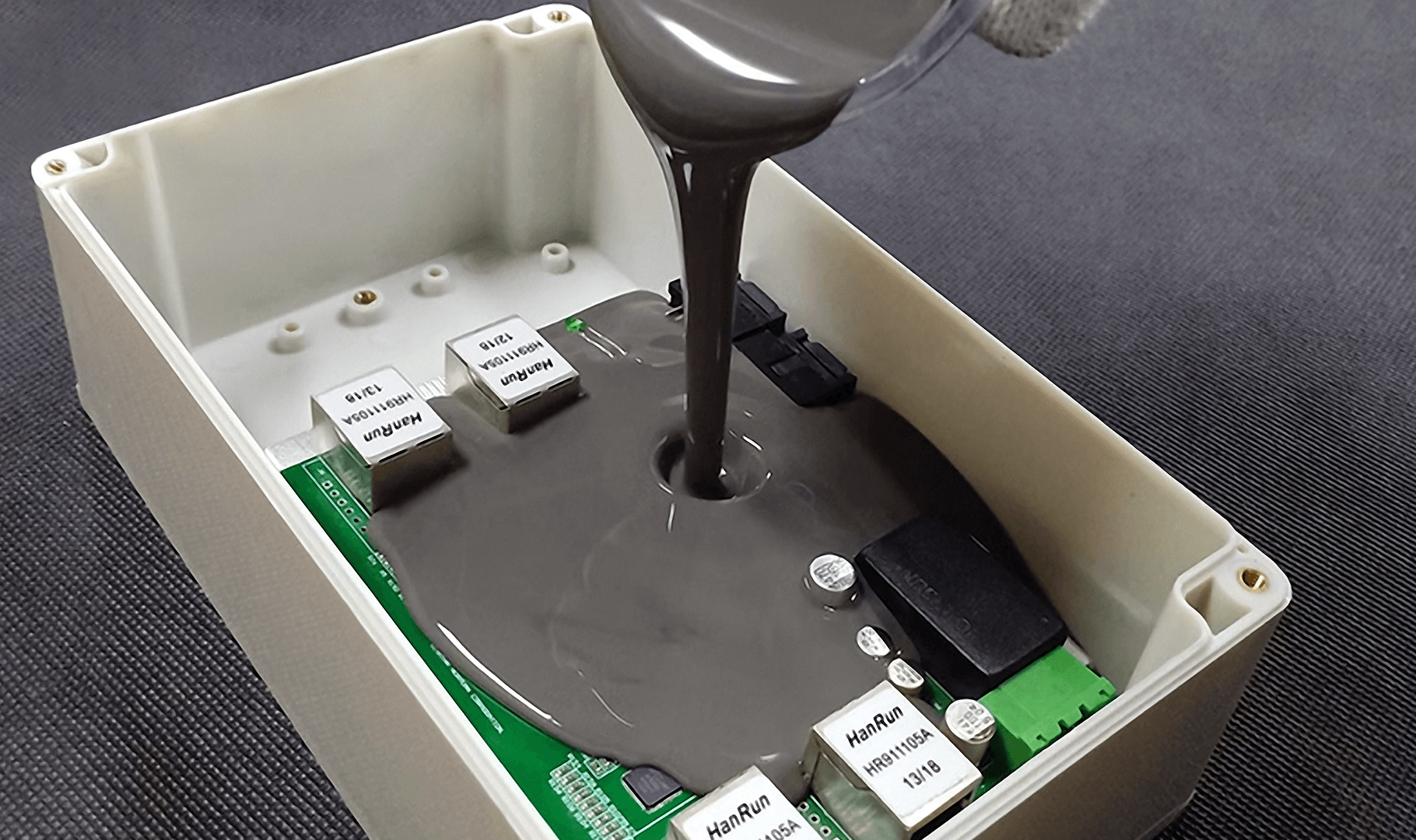
Features: Fast curing, deep-section curing capability, low shrinkage, and good dimensional stability. It is suitable for applications such as potting and mold manufacturing. Addition-cure two-component RTV produces no by-products and offers better environmental performance.
V. Silicone Rubber Production Process
1. High-Temperature Vulcanizing Silicone Rubber (HTV) Production Process
-
Raw Gum Synthesis: Using dimethyldichlorosilane as the primary raw material, cyclic compounds are produced through hydrolysis, cracking, and purification, then ring-opening polymerization is carried out under the action of a catalyst to produce high-molecular-weight polydimethylsiloxane raw gum.
-
Compounding: The raw gum is added to an internal mixer, followed by the sequential addition of a structure control agent, reinforcing agent, and functional additives. After uniform mixing, the compound is filtered to remove impurities.
-
Preforming: According to the shape of the product, extrusion or molding is used to preform the rubber compound into a blank.
-
Vulcanization: Vulcanization is divided into two stages. The first-stage vulcanization is carried out at 110\180°C to preliminarily shape the rubber compound; the second-stage vulcanization is conducted at 200\250°C for 2~4 hours to remove residual peroxide decomposition products and improve product performance.
-
Post-processing: The vulcanized products undergo trimming, inspection, and packaging.

2. Room-Temperature-Vulcanizing Silicone Rubber (RTV) Production Process
-
Base Material Preparation: 107 raw gum, reinforcing fillers, and dispersants are added to a planetary mixer and uniformly dispersed at high speed under vacuum. The base material is then obtained through grinding and filtration.
-
Filling and Packaging:
-
One-component RTV: The base material, crosslinking agent, catalyst, and coupling agent are mixed uniformly under vacuum and directly filled into sealed caulking tubes.
-
Two-component RTV: The base material is filled as Component A; the curing agent, catalyst, and an appropriate amount of filler are mixed uniformly and filled as Component B.
-
-
Curing: During use, the one-component product is directly extruded and applied, then cures automatically upon contact with air; the two-component product is mixed uniformly at the specified ratio, degassed, and then cast or coated, curing within several tens of minutes to several hours at room temperature.
VI. Full-Spectrum Applications of Silicone Rubber
1. Automotive Industry
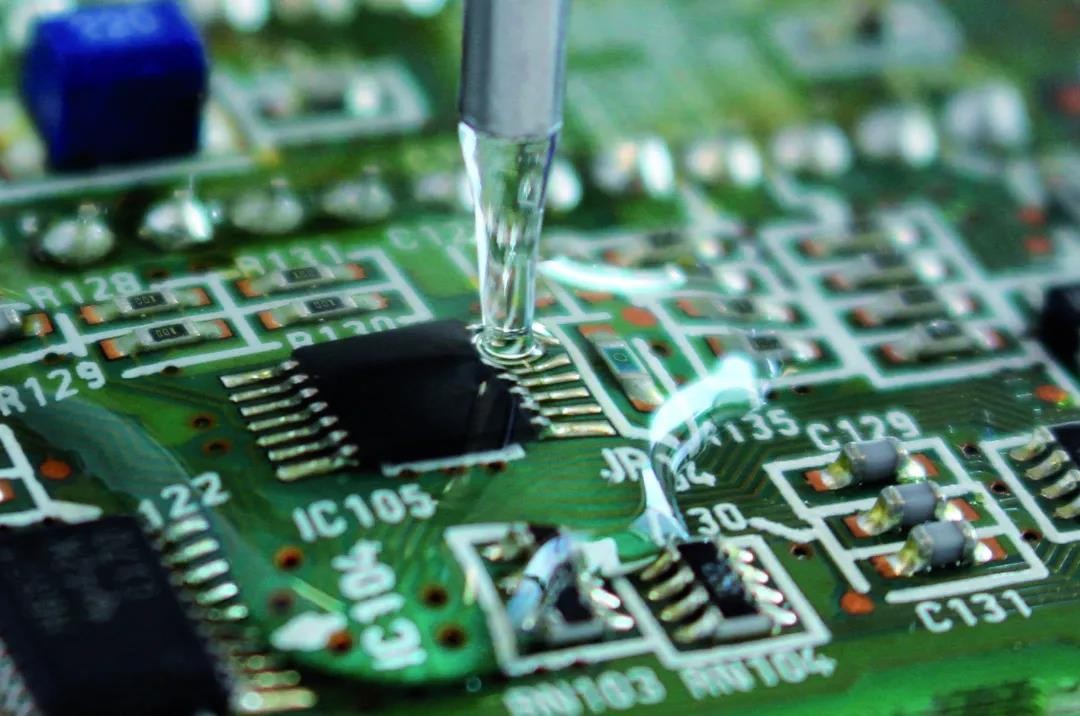
Silicone rubber is resistant to fuel and lubricating oil corrosion, significantly extending the service life of automotive components and reducing maintenance costs. It is primarily used inautomotive ignition wires, spark plug protective boots, radiator hoses, muffler linings, and battery terminals; with the development of automotive electronics, room-temperature-vulcanizing silicone rubber is widely used for electronic component potting, windshield and body sealing, and waterproof bonding of vehicle lights.
2. Electronics and Electrical Industry
This was the earliest and remains the largest application field for silicone rubber. It is primarily used intelevision anode caps, high-voltage lead wires, refrigerator defrosting wires, and power cables; silicone rubber insulators are gradually replacing ceramic products and are widely used in ultra-high-voltage transmission lines; electrically conductive silicone rubber is used for electrical contacts in computers, telephones, and other instruments; flame-retardant, radiation-resistant silicone rubber is used for wires and cables in nuclear power plants; silicone rubber heating pads are used for temperature control in precision instruments and oil pipelines.
3. Construction and Engineering
Room-temperature-vulcanizing silicone rubber is a core material for construction sealing, low-modulus weather-resistant silicone sealantis used for sealing building curtain walls, doors and windows, and expansion joints, accommodating thermal expansion and contraction as well as structural movement; silicone rubber waterproof coatings are used for waterproofing roofs, basements, and bathrooms; addition-cure silicone rubber is used to manufacture molds for architectural decoration.
4. Medical and Healthcare
Silicone rubber's excellent biocompatibility makes it a preferred medical polymer material. It is primarily used inmedical catheters, infusion tubes, artificial heart valves, artificial joints, and contact lenses; shape-memory silicone rubber is used for vascular stents; degradable silicone rubber is used for tissue-engineering scaffolds in advanced medical applications such as nerve and bone repair.
5. Aerospace and Defense
Silicone rubber is resistant to high and low temperatures and radiation, and is lightweight, making it an indispensable material in the aerospace sector. It is used inaircraft fuselage seals, fuel tank sealants, satellite solar panel back coatings, and thermal protection coatings for rocket nozzles; electrically conductive silicone rubber is used for electromagnetic shielding of electronic equipment; radiation-resistant silicone rubber is used for sealing nuclear reactors.
6. Daily Necessities and Home Appliances
Silicone rubber is non-toxic, odorless, and heat-resistant, and is widely used insealing rings for coffee pots, electric fryers, and steam irons; pump seals for dishwashers and washing machines; stereo headphone cushions, baby bottle nipples, kitchen utensils, and more.
Conclusion
Silicone rubber, thanks to itscustomizable properties, adaptability across a wide temperature range, excellent electrical insulation, and biocompatibility, has achieved full-spectrum coverage from traditional industries to high-tech applications. With the rapid development of emerging industries such as new energy, electronic information, and biomedicine, market demand for high-performance functional silicone rubber, such as thermally conductive silicone rubber, electrically conductive silicone rubber, and self-healing silicone rubber, will continue to grow. In the future, green and low-carbon production processes and advanced modification technologies will become the core development directions of the silicone rubber industry.
Would you like me to add more?Henkel LOCTITE Silicone Rubber Product Line Comparison Table, or would you like it adapted into a concise version suitable for publication on the official website?
Comment